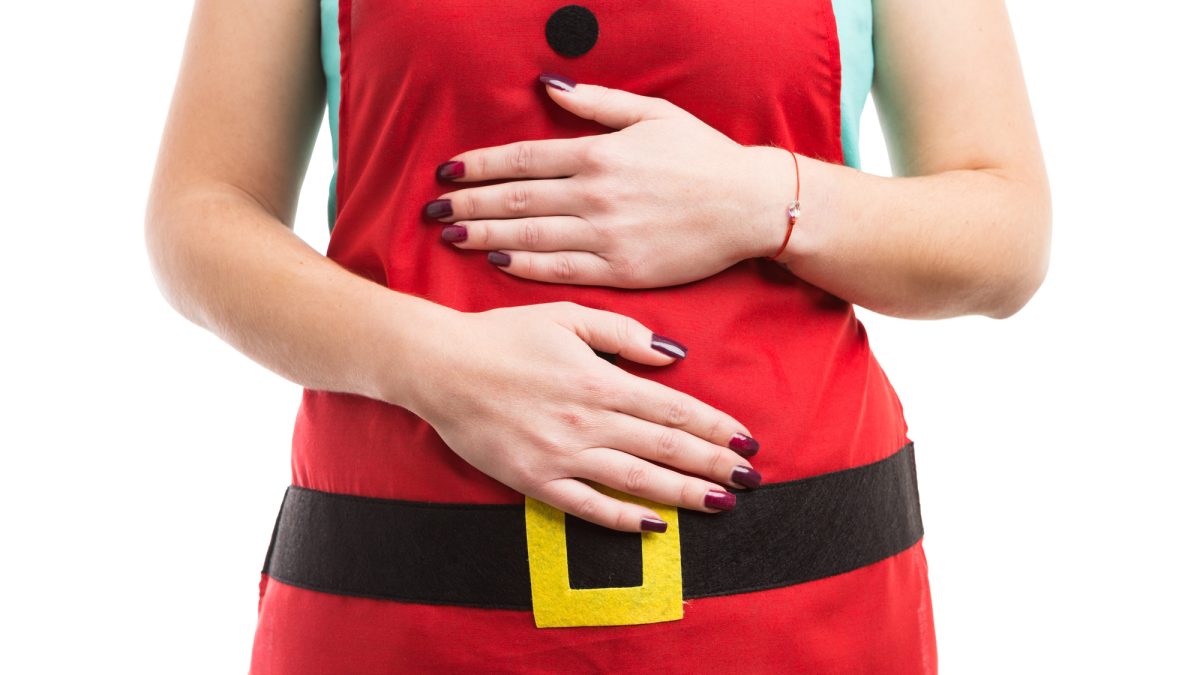
As we head into the sparkle of the festive season many women may notice that their digestion feels more sensitive than usual ,especially if they are navigating peri menopause or menopause. Between rich foods, busy schedules, cold weather and stress it’s no surprise that a little extra bloating can appear and make us feel less than our best.
If you’ve ever wondered why your stomach feels more unsettled in December, or how you can make yourself more comfortable, you’re not alone. In this feature we will explore the very real link between menopause and Christmas bloating – and sharing simple ways to ease it so you can enjoy the festive season to the full.
Read on for food that can disrupt your digestion and some ideas on how you can ease the bloat:
Hormonal changes
Falling oestrogen levels can slow digestion, meaning festive foods linger longer in the gut. This can lead to that uncomfortable “balloon” feeling.
Saltier, richer foods
From cheese boards to party nibbles, Christmas foods are often higher in salt and fat. Both can cause water retention and bloating.
More sugar & alcohol
Mince pies, chocolates and mulled wine can disrupt gut balance, increasing gas and slowing metabolism.
Changes to routine
Busy social calendars, less movement and disrupted sleep all affect digestion — especially during menopause, when your body is already more sensitive to change.
What Can Help Ease Festive Bloating
Keep portions steady
Enjoy your favourite foods — just avoid piling your plate too high. Smaller, balanced portions help digestion work more smoothly.
Sip mindfully
Swap the second glass of fizz for water or a peppermint tea. Staying hydrated helps move things along and reduces water retention.
Add gentle movement
A post-dinner walk, stretching or slow stroll around the block can help relieve trapped gas and support digestion.
Choose bloat-friendly foods
Opt for:
- citrus fruits
- ginger
- leafy greens
- nuts
- oats
These can all support the digestive system during the festive season.
Don’t ignore stress
Christmas can be overwhelming, and stress hormones can directly affect bloating. Taking 5 minutes for deep breathing, journaling or a quiet cup of tea can genuinely make a difference.
Bloating at this time of year is extremely common, especially during menopause when our digestive system becomes more sensitive to hormonal changes. Be kind to yourself, enjoy the season in a way that feels good and remember: a little bloating does not define you. However, if it continues for a prolonged period of time or you are concerned that this is not normal for you – you must consult your GP.